Solar Installers Proposal
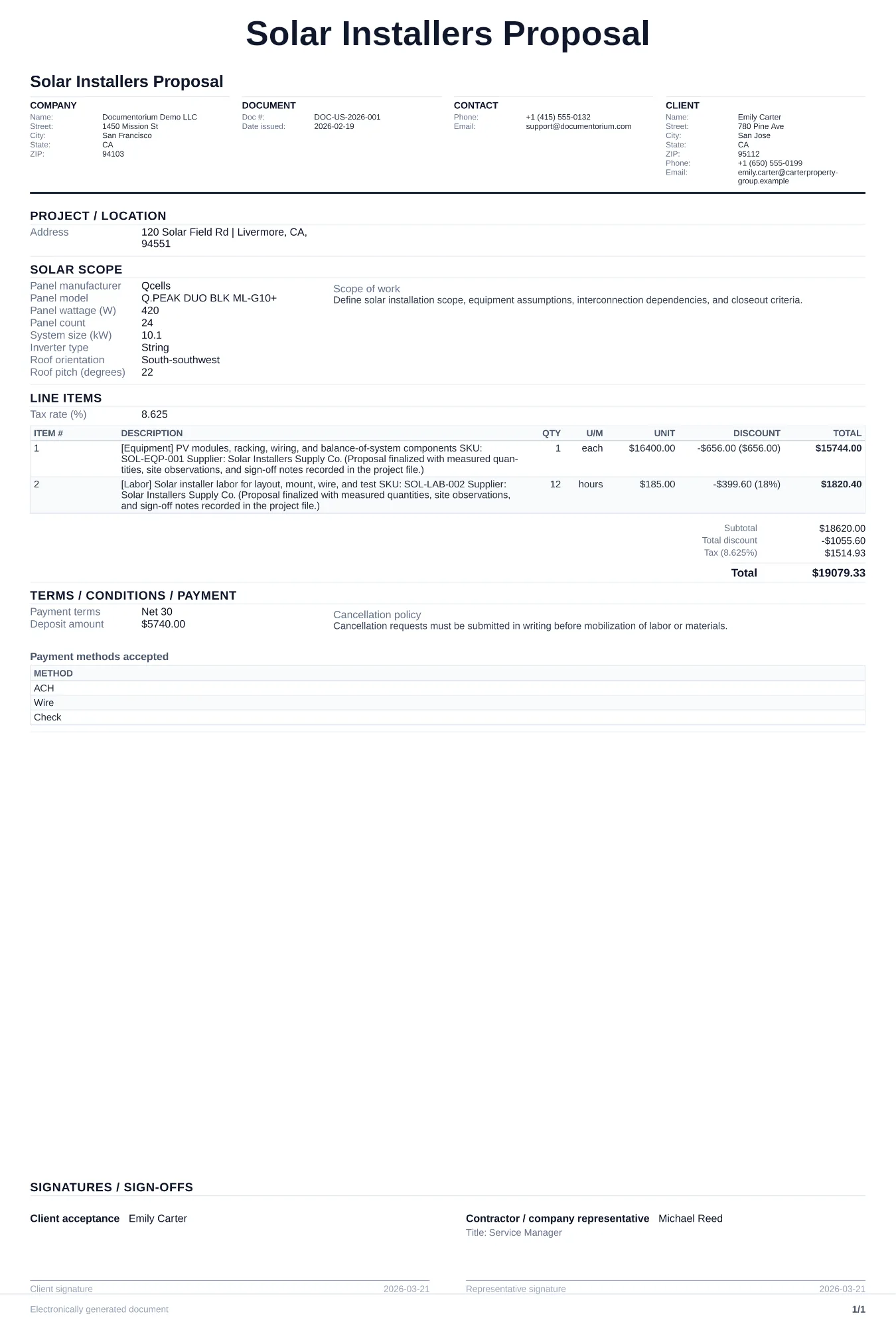
Present the site assessment, proposed system size, panel and inverter options, mounting and electrical work, production assumptions, schedule, itemized…
Complete and download the PDF before creating an account
When to use and what to include
Draft the system approach, timeline, and pricing online, then generate a proposal PDF for review. Use this after a roof assessment and energy-usage review when the customer needs the proposed design, production assumptions, utility and incentive inputs, installation scope, schedule, and price in one document.
What to include
- Property address, roof assessment summary (orientation, pitch, shading analysis with percentage of usable area), current annual electricity usage in kWh from utility bills, and average monthly electric bill.
- System design: total system size in kW DC, panel brand/model and wattage per panel (e.g., a 400-440W tier-one module), panel count, inverter type and model (string inverter, microinverter, or DC optimizer from brands like Enphase or SolarEdge), and expected annual production in kWh.
- Warranty summary using the current documents for the quoted equipment and installer: covered components, performance or degradation terms, period, start date, exclusions, claim process, transfer terms, and separate workmanship or roof-penetration coverage actually offered.
Common questions
- Can I structure this Solar Installers Proposal online for different client scenarios?
- Yes. Revise the proposed work, options, schedule, and pricing in the guided form before downloading the final PDF.
- Can I save this Solar Installers Proposal and reuse its structure for another customer?
- Yes. With an account, save it in your history, edit it later, and reuse its details as a starting point for another customer.
- Can I generate a presentation-ready PDF from this Solar Installers Proposal?
- Yes. Export a polished PDF suitable for email delivery, proposal reviews, and approvals.
- What size system do I need?
- System size is based on your annual kWh usage divided by your roof's production factor (based on orientation, pitch, and sun hours). A typical US home uses 10,000 kWh per year, which needs roughly a 7 to 9 kW system.
- What is the difference between string inverters and microinverters?
- String inverters are cheaper but the whole string drops output if one panel is shaded. Microinverters on each panel optimize independently and allow panel-level monitoring. Recommend microinverters for roofs with partial shading.
- How long does the installation process take?
- Record the estimated installation duration separately from permitting, inspection, and utility-interconnection milestones. Timing varies by system, site, authority, and utility, so confirm current dates with the responsible parties.
- Will solar panels damage my roof?
- The proposal should state the mounting and flashing method, roof-condition findings, who is responsible for roof work, and the exact penetration warranty offered. A qualified installer or roofer should assess roof suitability and applicable installation requirements for the site.
- What is the difference between a proposal and a quote?
- A quote presents the price for a defined job. A proposal also explains your approach, timeline, materials, and pricing, which suits larger or multi-phase projects.
- What makes a proposal clear and complete?
- Describe the project approach, deliverables, materials, timeline, pricing, assumptions, and next step in terms specific to the customer.
- Should I include multiple pricing options?
- Yes. Three clearly defined options let customers compare scope, equipment or materials, performance, and price before choosing.