Moving Services Contract / Agreement
Record origin and destination, move dates and access, inventory and services, pricing method and charges, valuation selection, exclusions, cancellation…
Complete and download the PDF before creating an account
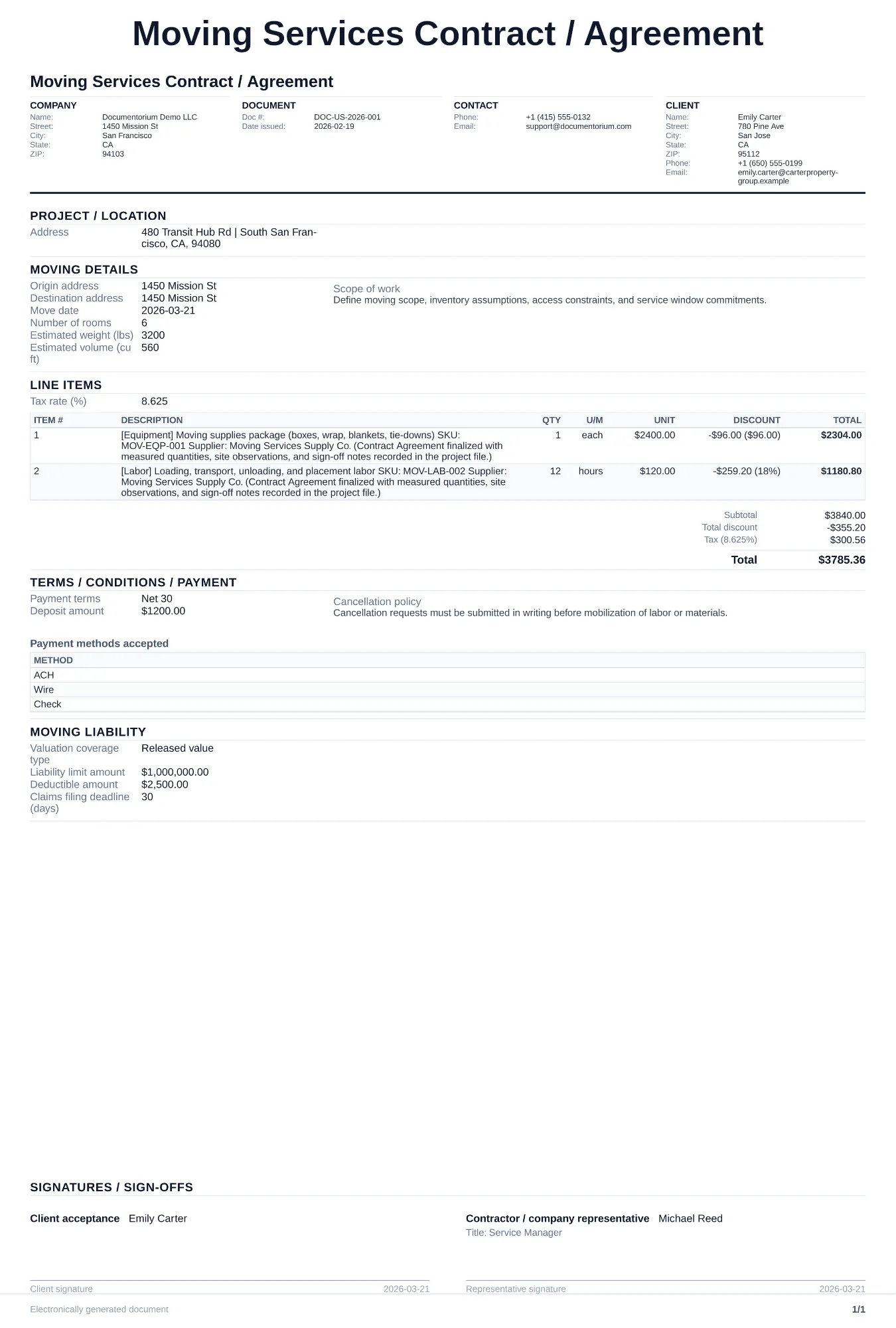
When to use and what to include
Draft moving-service terms in the guided form, then generate a PDF for review and signature. Record origin and destination, dates and access, inventory, services, pricing method and charges, valuation selection, exclusions, cancellation, claims contacts, and signatures; interstate and intrastate requirements differ.
What to include
- Origin and destination addresses, move date with backup date, and access details for both locations (elevator reservation, parking permits, loading dock hours, stair count).
- Detailed inventory list of items to be moved with total estimated weight or cubic footage, and items the movers will not transport (hazardous materials, perishables, valuables).
- Pricing type and method required for the move, with any binding or non-binding designation defined under the applicable rules, plus packing, long-carry, shuttle, storage, fuel, travel, and other stated charges.
- Claims process: how to file a damage or loss claim, the filing deadline that applies (nine months for covered interstate loss or damage claims), inspection requirements, and the company's settlement timeline.
Common questions
- Can I edit this Moving Services Contract / Agreement online before both parties sign?
- Yes. Revise the included work, payment terms, schedule, and other clauses in the guided form before downloading the final PDF.
- Can I save this Moving Services Contract / Agreement as a reusable contract baseline?
- Yes. With an account, save the contract in your history, edit it later, and reuse relevant party, job, and term details as a starting point.
- Can I generate a sign-ready PDF from this Moving Services Contract / Agreement?
- Yes. Export a clean contract PDF suitable for e-sign workflows or manual signatures.
- Can I move my own high-value items separately?
- Yes. Separate customer-transported items from the mover’s inventory so the crew, customer, and insurer share the same responsibility record.
- How do the estimate, bill of lading, valuation choice, and tariff fit together?
- The estimate records the price basis, the contract records the service terms, the bill of lading records shipment details, and the valuation choice records the selected loss-or-damage terms. The [moving service bid guide](/blog/moving-service-bids-bill-of-lading-insurance-tariffs) shows how those documents work together.
- What should I review before using the completed Moving Services Contract / Agreement?
- Review the parties, job or property details, dates, amounts, notes, and signatures entered in the Moving Services Contract / Agreement. Confirm that the PDF matches the underlying job or agreement and any legal, tax, technical, filing, or notice requirements that apply to the location.