Drywall Inspection Report
Record rooms, board and finish specifications, observed installation conditions, deficiencies, photos, corrective actions, and sign-off in an inspection PDF.
Complete and download the PDF before creating an account
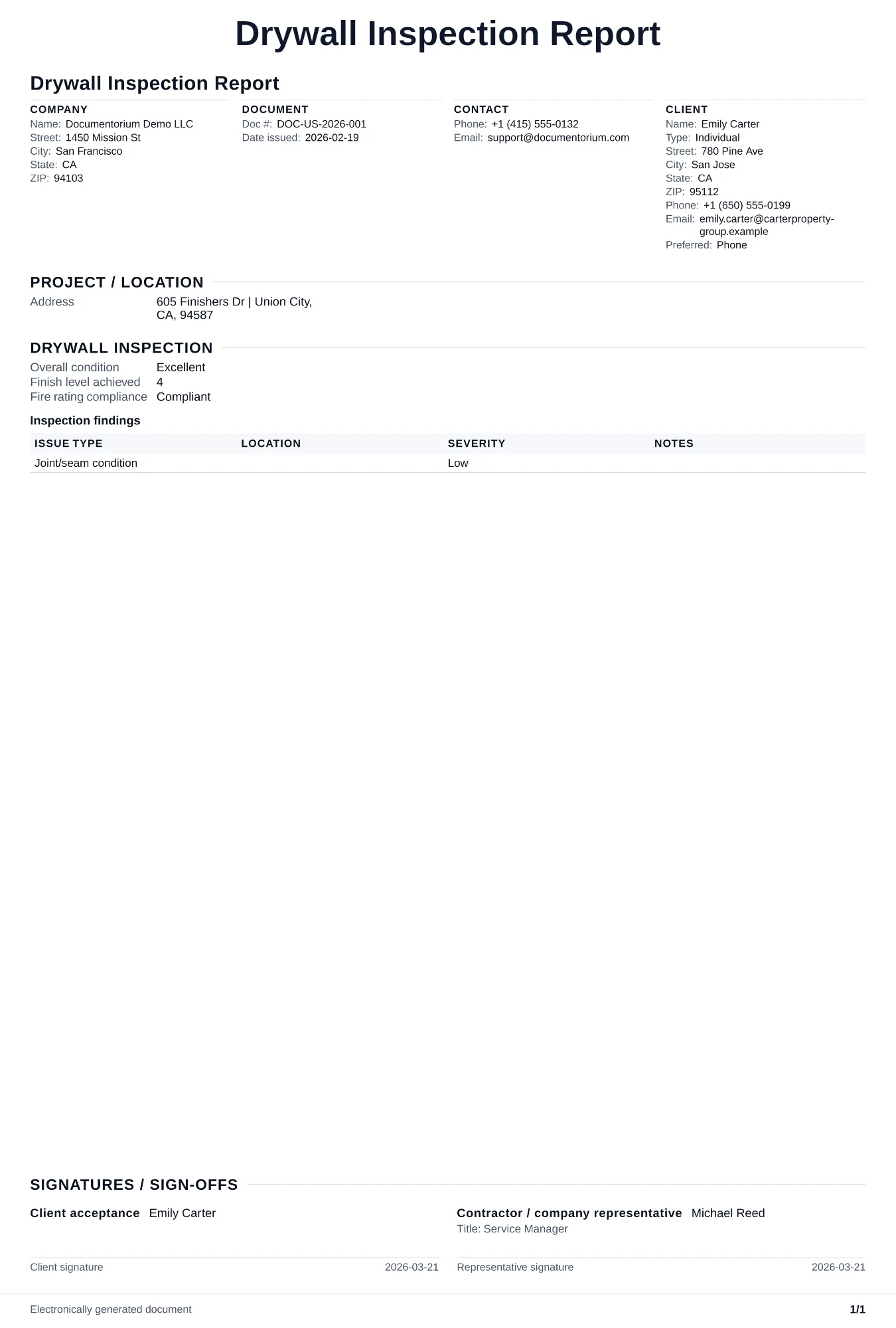
When to use and what to include
Record inspection findings online, then generate a clear PDF report with documented outcomes. Use this when conducting a quality inspection on completed drywall work, whether your own crew's output or a subcontractor's work, before the next trade (painter) begins.
What to include
- Property address, inspection date, inspector name, and the drywall crew or subcontractor whose work is being inspected.
- Room-by-room assessment: board type and thickness verified against spec, seam locations checked, screw pattern verified (every 12 inches on edges, 16 inches in field), and no missed screws or popped fasteners.
- Tape and finish evaluation per room: number of mud coats applied, finish level achieved (Level 3, 4, or 5), seam visibility under side-lighting, corner bead straightness, and any bubbling, cracking, or ridging noted.
- Texture assessment if applicable: texture type (knockdown, orange peel) matches spec, coverage uniformity, no bare spots, and consistent pattern across walls and ceilings.
Common questions
- Can I save this Drywall Inspection Report for re-inspections and audits?
- Yes. With an account, save it so future inspections can compare findings and close out outstanding items.
- Can I export this Drywall Inspection Report as a formal PDF record?
- Yes. Download a clean PDF ready to share with clients or keep in your job files.
- How do I check finish quality?
- Record the lighting and viewing conditions required by the project specification, then inspect and photograph seams, ridges, fasteners, corners, texture, and other stated acceptance items under those conditions.
- What screw pattern should I verify?
- Verify fastener type, length, spacing, edge distance, depth, and substrate against the approved assembly, drawings, product instructions, and applicable requirements; record any missed, over-driven, or proud fasteners.
- When should I inspect, before or after sanding?
- Inspect after the final mud coat and sanding. That is the finished product the painter will work on. Inspecting before sanding hides imperfections that will show through paint.
- How does an inspection report help the customer?
- It gives the customer a dated record of the conditions observed, supporting photos, recommended follow-up, and the inspector's sign-off. It should distinguish observations from work that still needs separate approval.